Refractive lens replacement
Replacing the eye’s natural lens with an artificial one chosen to correct your focus, to reduce or remove the need for reading glasses and varifocals. A cataract can never develop afterwards.
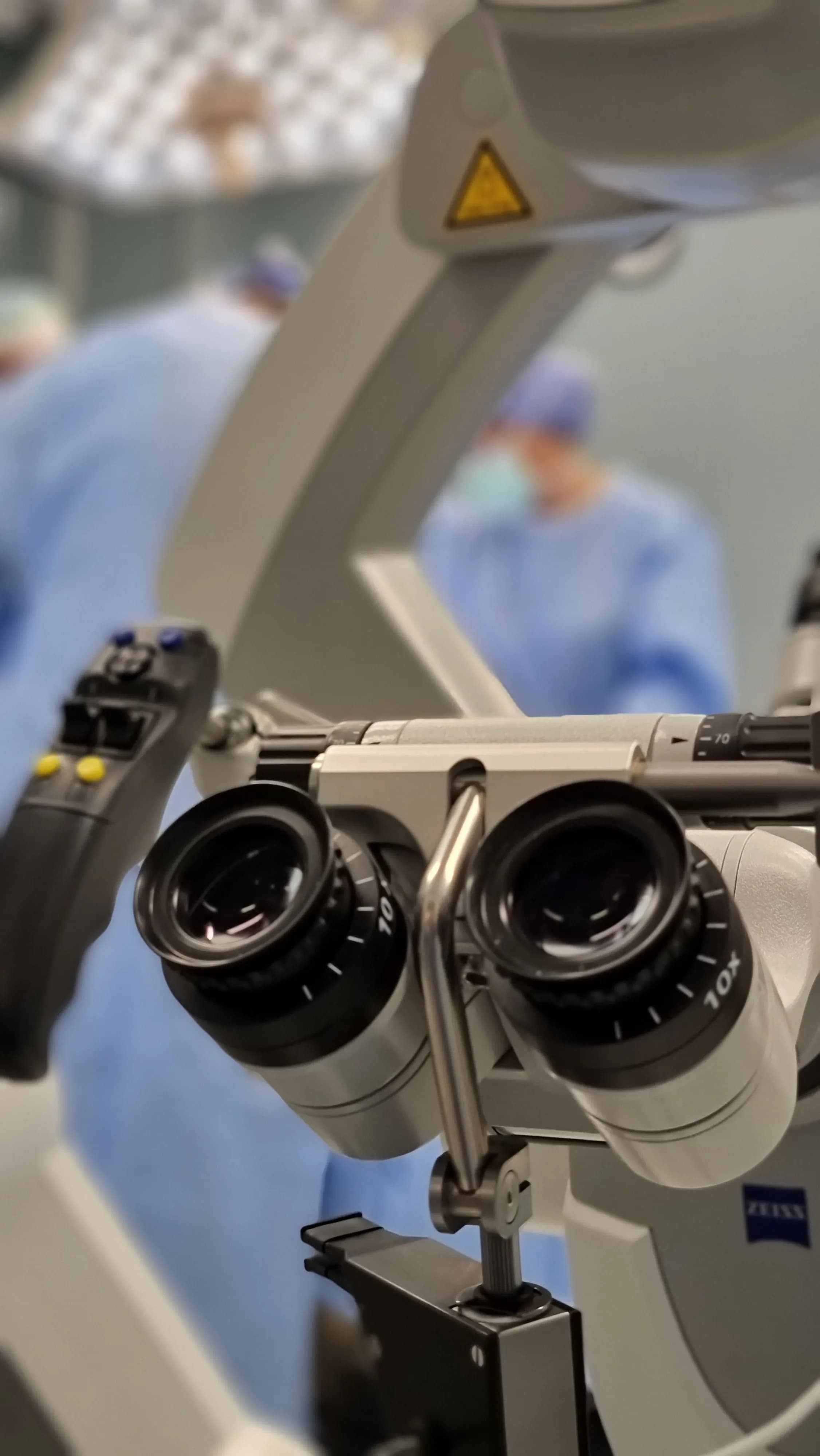
Stock photograph — https://www.pexels.com/photo/30769276/
- Also known as
- RLE, Refractive lens exchange, Clear lens exchange, Lens replacement surgery
- Typical recovery
- Most people return to daily activities within a few days
- Fees from
- from £2,795 per eye
Who this is generally considered for
Typically considered by people from their mid-forties onwards who are tired of reading glasses or varifocals, and for whom laser correction is unlikely to give a lasting result. Whether it is appropriate for any individual depends on a full examination.
This is general information, not advice about your own eyes. Whether this treatment is right for you can only be established at a consultation, after Ms Jiang has examined them.
Treatment
Refractive lens replacement
Replacing the eye’s natural lens with an artificial one chosen to correct your focus, to reduce or remove the need for reading glasses and varifocals. A cataract can never develop afterwards.
Who this is usually considered for
Typically considered by people from their mid-forties onwards who are tired of reading glasses or varifocals, and for whom laser correction is unlikely to give a lasting result. Whether it is appropriate for any individual depends on a full examination.
Recovery
Most people return to daily activities within a few days
Before you decide
Ms Jiang will go through the risks relevant to your eyes specifically, with figures, and give you written information to take away. Nobody is asked to decide on the day.
How it works
- 01
Consultation
A full examination and measurements, a discussion of the options including doing nothing, and written information to take away.
About 45 minutes
- 02
The procedure
A day case under local anaesthetic. You are awake but comfortable, and you go home a couple of hours afterwards.
About 20 minutes
- 03
Follow-up
Seen the next day, then at intervals over about six weeks until your vision has settled and drops are finished.
Six weeks
Common questions
What is refractive lens exchange?
Refractive lens exchange replaces the eye’s natural lens with an artificial one chosen to correct your focus. The procedure is the same one used for cataract surgery, but it is carried out before a cataract has developed, to reduce dependence on glasses.
Because the natural lens is removed, a cataract cannot form later. Whether it is a sensible option for you depends on your prescription, the health of your eyes and what you want from your vision, which is what a consultation is for.
Am I too old or too young for lens replacement?
There is no fixed age limit in either direction. In general, lens replacement is most often considered from the mid-forties onwards, once the natural lens has begun to lose its focusing range and laser correction is less likely to give a lasting result.
Younger patients are usually better served by other options. Ms Jiang will tell you honestly if that applies to you, including if the answer is that you should do nothing at all for now.
Are both eyes treated on the same day?
Usually not. The second eye is normally treated one to two weeks after the first, which allows the first eye to settle and lets Ms Jiang confirm the result before proceeding.
Some patients have both eyes treated on the same day where there is a clear reason to. This is discussed individually.
What are the risks?
Lens surgery is one of the most commonly performed operations in the UK and serious complications are rare, but it is still surgery and it is not risk-free.
Risks include infection, inflammation, swelling at the back of the eye, retinal detachment, and the possibility that the refractive result is not exactly as planned and needs further correction. Some patients notice glare or haloes around lights at night, particularly with multifocal lenses.
Ms Jiang will go through the risks that are relevant to your eyes specifically, with figures, and give you written information to take away before you decide anything.
What is included in the quoted price?
You are given a written quotation itemising every charge before anything is booked, and nothing is charged before you have had it in front of you. The initial consultation is charged separately from any treatment that follows.
Ask about refractive lens replacement
Enquiries are answered within one working day. There is no obligation and no deposit is taken at the enquiry stage.
Common questions
What is refractive lens exchange?
Refractive lens exchange replaces the eye’s natural lens with an artificial one chosen to correct your focus. The procedure is the same one used for cataract surgery, but it is carried out before a cataract has developed, to reduce dependence on glasses.
Because the natural lens is removed, a cataract cannot form later. Whether it is a sensible option for you depends on your prescription, the health of your eyes and what you want from your vision, which is what a consultation is for.
Am I too old or too young for lens replacement?
There is no fixed age limit in either direction. In general, lens replacement is most often considered from the mid-forties onwards, once the natural lens has begun to lose its focusing range and laser correction is less likely to give a lasting result.
Younger patients are usually better served by other options. Ms Jiang will tell you honestly if that applies to you, including if the answer is that you should do nothing at all for now.
Are both eyes treated on the same day?
Usually not. The second eye is normally treated one to two weeks after the first, which allows the first eye to settle and lets Ms Jiang confirm the result before proceeding.
Some patients have both eyes treated on the same day where there is a clear reason to. This is discussed individually.
What are the risks?
Lens surgery is one of the most commonly performed operations in the UK and serious complications are rare, but it is still surgery and it is not risk-free.
Risks include infection, inflammation, swelling at the back of the eye, retinal detachment, and the possibility that the refractive result is not exactly as planned and needs further correction. Some patients notice glare or haloes around lights at night, particularly with multifocal lenses.
Ms Jiang will go through the risks that are relevant to your eyes specifically, with figures, and give you written information to take away before you decide anything.
What is included in the quoted price?
You are given a written quotation itemising every charge before anything is booked, and nothing is charged before you have had it in front of you. The initial consultation is charged separately from any treatment that follows.