Cataracts
A cataract is a clouding of the eye’s natural lens. It develops slowly, usually over years, and is a normal part of getting older rather than a disease you have caught or caused.
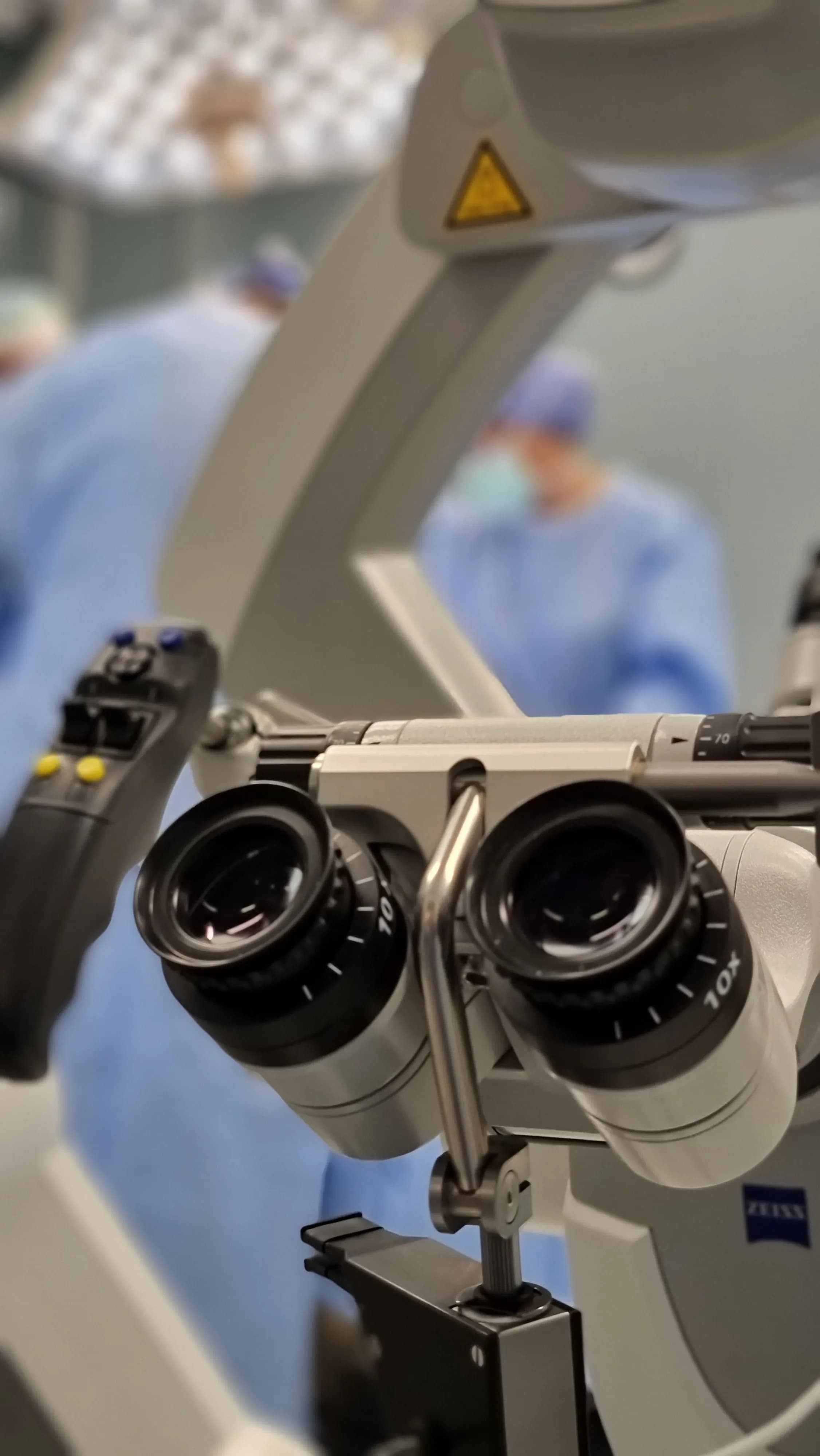
Stock photograph — https://www.pexels.com/photo/30769276/
Symptoms people commonly describe
- Vision that has become gradually hazy or washed out
- Glare and haloes around headlights when driving at night
- Colours looking faded or yellowed
- Needing brighter light to read comfortably
- Frequent changes to your glasses prescription
Recognising your symptoms in this list does not mean you have this condition, and not recognising them does not rule it out. Only an examination with Ms Jiang or another eye specialist can establish what is going on.
What is happening in the eye
The lens sits behind the pupil and focuses light onto the retina. Over time the proteins in it change and it becomes progressively less clear, scattering light instead of focusing it. That scatter is why glare at night is often the first thing people notice, well before their sight test result changes much.
How quickly it progresses
Most cataracts develop over years rather than months. Some people have a cataract identified at a routine sight test and notice nothing at all for a long time afterwards; others find their night driving deteriorates quite quickly. Both are normal.
What can be done
There is no drop, exercise or supplement that clears a cataract. The only treatment is surgery to replace the lens, which is a routine day-case procedure. Until it starts to interfere with things you want to do, monitoring is a perfectly reasonable choice, and stronger glasses or better lighting can help in the meantime.
Common questions
How do I know when my cataract needs treating?
A cataract needs treating when it interferes with something you want to do — reading, driving at night, recognising faces, working. There is no need to wait until it is "ripe"; that advice belongs to a much older era of surgery.
Equally, there is no obligation to treat a cataract that is not bothering you. Monitoring is a legitimate choice.
When can I drive again after cataract surgery?
Most people are back to driving within a few days to a week, once vision in the treated eye meets the DVLA standard and they feel confident. Ms Jiang will confirm at your follow-up appointment.
You must not drive yourself home on the day of surgery, and you will need someone to collect you.
How long is the recovery?
Most people are seeing usefully within a day or two and back to ordinary activities within a week.
- Same day — go home a couple of hours after the procedure; vision is often blurry
- Next day — a follow-up check, and most people are reading comfortably
- First week — avoid swimming, dusty environments and eye rubbing
- Four to six weeks — vision has fully settled and any glasses prescription is finalised
Everyone heals at their own pace, and these are typical timescales rather than a promise.
Talk to Ms Jiang about cataracts
A consultation is 45 minutes with Ms Jiang herself, and it is perfectly common to leave with a recommendation to do nothing yet.
Common questions
How do I know when my cataract needs treating?
A cataract needs treating when it interferes with something you want to do — reading, driving at night, recognising faces, working. There is no need to wait until it is "ripe"; that advice belongs to a much older era of surgery.
Equally, there is no obligation to treat a cataract that is not bothering you. Monitoring is a legitimate choice.
When can I drive again after cataract surgery?
Most people are back to driving within a few days to a week, once vision in the treated eye meets the DVLA standard and they feel confident. Ms Jiang will confirm at your follow-up appointment.
You must not drive yourself home on the day of surgery, and you will need someone to collect you.
How long is the recovery?
Most people are seeing usefully within a day or two and back to ordinary activities within a week.
- Same day — go home a couple of hours after the procedure; vision is often blurry
- Next day — a follow-up check, and most people are reading comfortably
- First week — avoid swimming, dusty environments and eye rubbing
- Four to six weeks — vision has fully settled and any glasses prescription is finalised
Everyone heals at their own pace, and these are typical timescales rather than a promise.