Presbyopia
Presbyopia is the gradual loss of the eye’s ability to focus up close. It affects everyone eventually, usually becoming noticeable in the mid-forties, and it is why reading glasses appear on the kitchen table.
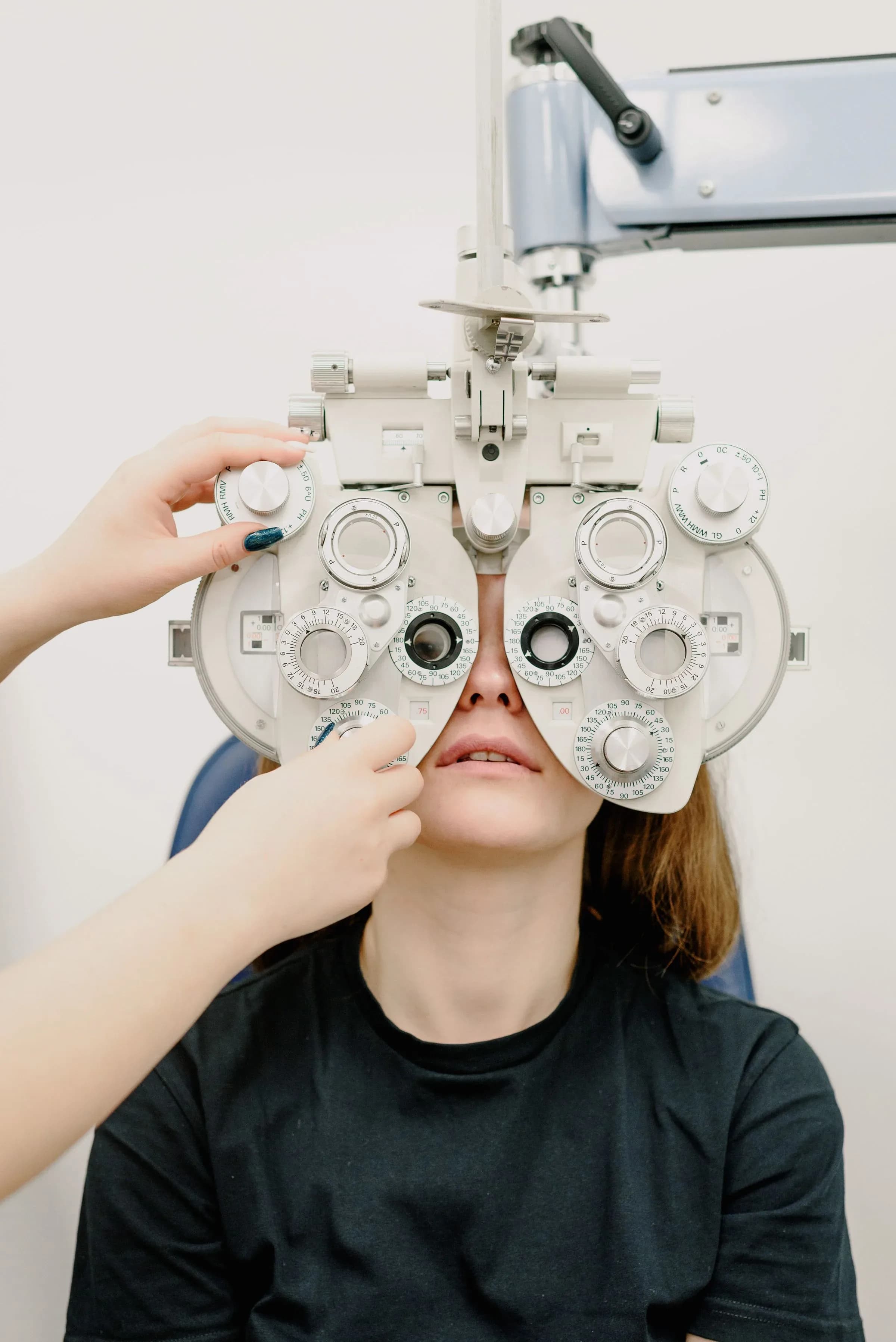
Stock photograph — https://www.pexels.com/photo/5752284/
Symptoms people commonly describe
- Holding a menu or phone further away to read it
- Needing more light for small print
- Tired or aching eyes after close work
- Struggling to switch focus between near and far
Recognising your symptoms in this list does not mean you have this condition, and not recognising them does not rule it out. Only an examination with Ms Jiang or another eye specialist can establish what is going on.
Why it happens to everyone
The natural lens changes shape to focus on close objects. It gradually stiffens from childhood onwards, and somewhere in the mid-forties it can no longer flex enough to bring near objects into focus. This is not a disease and it is not preventable.
The usual options
- Reading glasses — simple, cheap, and perfectly adequate for many people
- Varifocals — one pair for everything, though they take some getting used to
- Contact lenses, including monovision arrangements
- Refractive lens exchange — replacing the lens permanently
None of these is automatically better than the others. What suits you depends on your prescription, your work, your hobbies and how much the glasses genuinely bother you.
A note on expectations
No option restores the focusing range of a twenty-year-old eye. Lens replacement can substantially reduce dependence on glasses, and most people who have it stop reaching for readers routinely — but "substantially reduce" is an honest description and "never wear glasses again" is not.
Common questions
What is refractive lens exchange?
Refractive lens exchange replaces the eye’s natural lens with an artificial one chosen to correct your focus. The procedure is the same one used for cataract surgery, but it is carried out before a cataract has developed, to reduce dependence on glasses.
Because the natural lens is removed, a cataract cannot form later. Whether it is a sensible option for you depends on your prescription, the health of your eyes and what you want from your vision, which is what a consultation is for.
Am I too old or too young for lens replacement?
There is no fixed age limit in either direction. In general, lens replacement is most often considered from the mid-forties onwards, once the natural lens has begun to lose its focusing range and laser correction is less likely to give a lasting result.
Younger patients are usually better served by other options. Ms Jiang will tell you honestly if that applies to you, including if the answer is that you should do nothing at all for now.
What are the risks?
Lens surgery is one of the most commonly performed operations in the UK and serious complications are rare, but it is still surgery and it is not risk-free.
Risks include infection, inflammation, swelling at the back of the eye, retinal detachment, and the possibility that the refractive result is not exactly as planned and needs further correction. Some patients notice glare or haloes around lights at night, particularly with multifocal lenses.
Ms Jiang will go through the risks that are relevant to your eyes specifically, with figures, and give you written information to take away before you decide anything.
Talk to Ms Jiang about presbyopia
A consultation is 45 minutes with Ms Jiang herself, and it is perfectly common to leave with a recommendation to do nothing yet.
Common questions
What is refractive lens exchange?
Refractive lens exchange replaces the eye’s natural lens with an artificial one chosen to correct your focus. The procedure is the same one used for cataract surgery, but it is carried out before a cataract has developed, to reduce dependence on glasses.
Because the natural lens is removed, a cataract cannot form later. Whether it is a sensible option for you depends on your prescription, the health of your eyes and what you want from your vision, which is what a consultation is for.
Am I too old or too young for lens replacement?
There is no fixed age limit in either direction. In general, lens replacement is most often considered from the mid-forties onwards, once the natural lens has begun to lose its focusing range and laser correction is less likely to give a lasting result.
Younger patients are usually better served by other options. Ms Jiang will tell you honestly if that applies to you, including if the answer is that you should do nothing at all for now.
What are the risks?
Lens surgery is one of the most commonly performed operations in the UK and serious complications are rare, but it is still surgery and it is not risk-free.
Risks include infection, inflammation, swelling at the back of the eye, retinal detachment, and the possibility that the refractive result is not exactly as planned and needs further correction. Some patients notice glare or haloes around lights at night, particularly with multifocal lenses.
Ms Jiang will go through the risks that are relevant to your eyes specifically, with figures, and give you written information to take away before you decide anything.