The “second cataract”, and what a YAG laser actually does
Vision hazing over again after cataract surgery is not the cataract coming back — it cannot. Here is what has actually happened, and what a YAG capsulotomy involves.
By Ms Li Jiang MBChB (Hon) FRCOphth CertLRS · Published 3 July 2026
Clinically reviewed by Ms Jiang on 3 July 2026
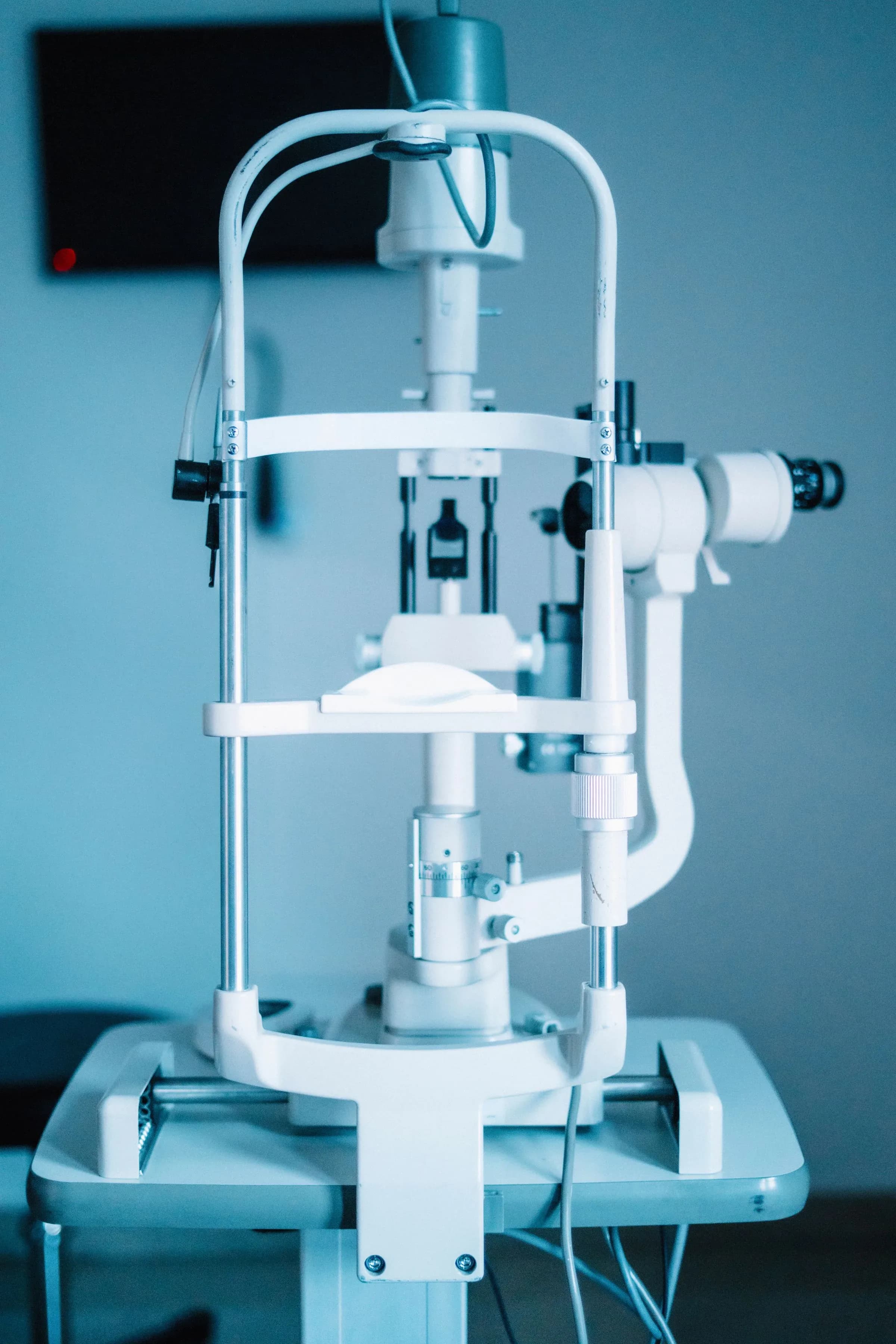
Stock photograph — https://www.pexels.com/photo/34093125/
Vision that was clear after cataract surgery, months or years earlier, gradually hazes over again. It looks and feels much like the original cataract, and the natural conclusion — that the cataract has come back — is a reasonable one to draw. It is also wrong, and cannot be right, because the cloudy lens was physically removed at the first operation and nothing has grown back in its place.
What has actually happened
The artificial lens implanted at cataract surgery is held in place by a thin membrane called the posterior capsule — part of the eye’s own natural lens casing, left in position deliberately because it supports the implant. In a proportion of people, that capsule slowly becomes cloudy over the months or years afterwards, scattering light in much the same way the original cataract did. This is posterior capsule opacification, sometimes called a ‘secondary cataract’, though a cloudy window is a more accurate description than a returning disease.
A useful way to picture it: the original operation is like replacing a cloudy pane of glass with a clear one, but leaving the window frame around it in place. What clouds over later is the frame’s own lining, not the new pane. The artificial lens itself does not change, age or degrade — the haze sits in the tissue behind it.
What the procedure involves
A YAG laser capsulotomy is done sitting at a slit lamp, the same instrument used for a routine eye examination, rather than in an operating theatre. Drops dilate the pupil; there is no injection and no general anaesthetic. The laser makes a small opening in the centre of the clouded capsule, restoring a clear path for light through to the retina. The appointment itself takes only a few minutes.
What it feels like
Most people feel nothing beyond the drops themselves, and any sensation during the procedure is more often a series of small clicks than anything painful. There can be a few flashes of light as the laser fires, which stop the moment it is finished. It is not repeated: once the opening is made, the capsule stays open, and there is no equivalent of the capsule clouding over for a second time.
Afterwards: floaters, and why they settle
Small fragments of capsule released by the laser can drift in the vitreous gel as new floaters for a few days to a few weeks afterwards. This is expected and is not a sign that anything has gone wrong. The fragments disperse and the floaters become progressively less noticeable, in the same way ordinary floaters fade into the background over time. Vision often improves within a day of the procedure, once any drops have worn off.
How common this is
Posterior capsule opacification is common enough after cataract surgery that most clinics mention it as a genuine possibility rather than a remote one, without needing to attach a figure to it. It can develop within months of the original operation or not for several years, and there is no reliable way to predict, at the time of the first surgery, which eyes will need a capsulotomy and which never will.
The small risks
A YAG capsulotomy is generally low risk, but it is not risk-free. A short-lived rise in eye pressure afterwards is checked for at a review shortly after treatment, and drops are sometimes given in advance to reduce the chance of it. Retinal detachment is a recognised, uncommon complication — thought to relate to the sudden release of traction on the vitreous gel when the capsule is opened — and the warning signs to watch for afterwards are the same as after any eye procedure.
- A short-lived rise in eye pressure, checked at a review shortly after treatment
- New floaters that are expected and usually settle within days to weeks
- A sudden shower of new floaters unlike the expected kind, new flashing lights, or a dark curtain or shadow across the vision — this means eye casualty or A&E the same day, not a routine appointment
Worth asking before the original surgery
Not everyone who has cataract surgery will need a YAG capsulotomy, and it cannot be predicted in advance who will. But because it is a recognised, fairly common event after cataract surgery rather than a rare complication, it is worth asking — before the original operation, while comparing packages — whether a YAG capsulotomy, if it is needed later, is included in the price or billed separately if and when it happens. That is a considerably more useful question to ask in advance than whether it will be needed at all.
It is also worth asking who would actually perform it. Some packages route any later YAG treatment back through the original surgeon as a matter of course; others treat it as a fresh referral into a general list. Neither is wrong, but knowing which applies before you need the answer saves a conversation you would rather not be having while your vision is already hazy.
References
This article is general information and is not advice about your own eyes. If something here worries you, arrange a consultation rather than acting on it alone.