Monofocal, multifocal or extended depth of focus: how lens implants differ
Each lens implant trades one kind of vision for another. What monofocal, multifocal, trifocal and EDOF designs each give up is a better starting point than what they promise.
By Ms Li Jiang MBChB (Hon) FRCOphth CertLRS · Published 8 May 2026
Clinically reviewed by Ms Jiang on 8 May 2026
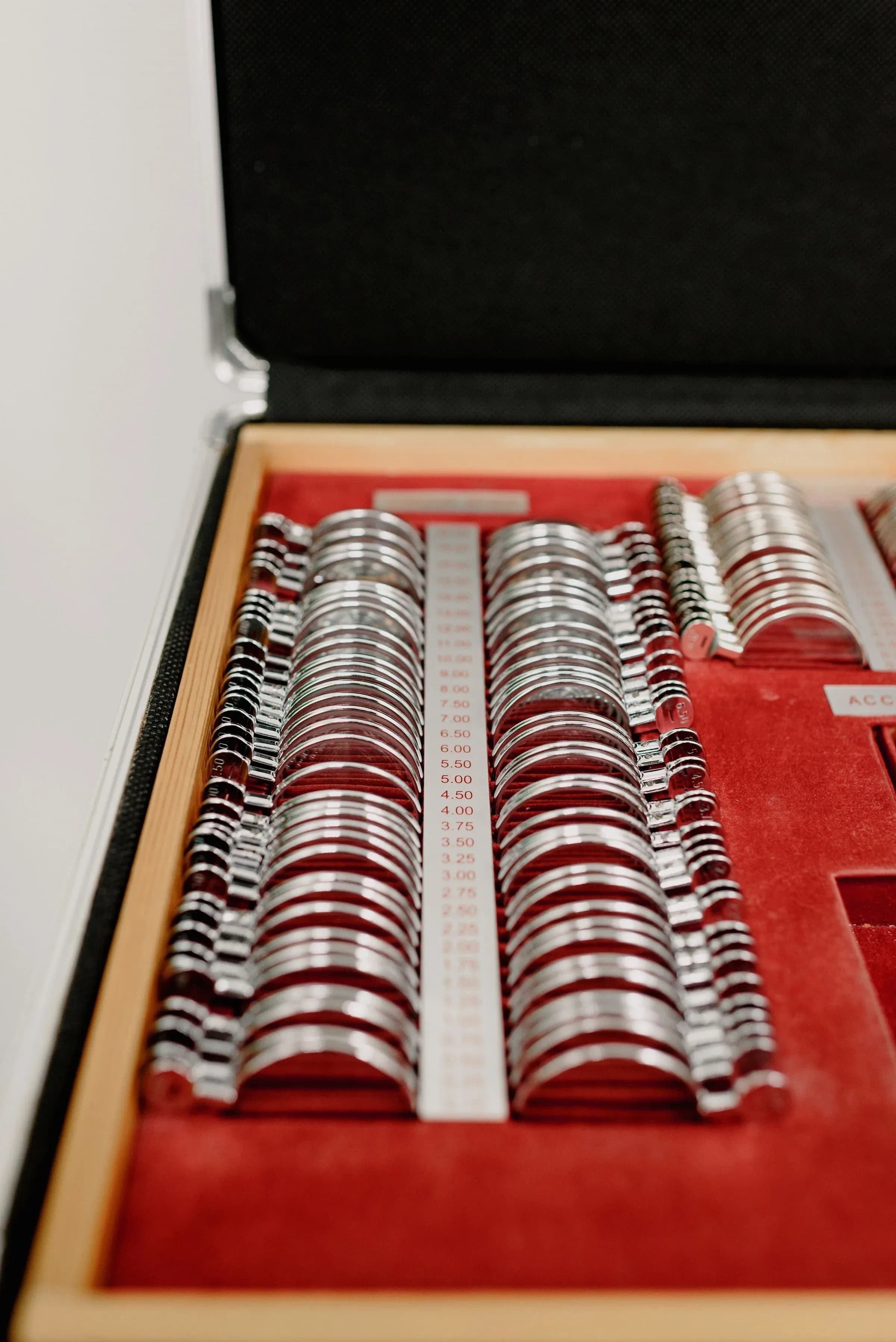
Stock photograph — https://www.pexels.com/photo/5752237/
Cataract surgery and refractive lens exchange both end with an artificial lens sitting where the natural one used to be, and unlike almost every other decision in the process, this one cannot easily be revisited afterwards. Removing and swapping a lens implant is possible but is a second operation, with its own risks, so the choice is worth making slowly rather than during the appointment the diagnosis is given.
What the trade-off actually is
Every implant is fixed in its optical power once it is in the eye. A monofocal lens focuses light from one distance sharply and leaves the rest to glasses. A multifocal or extended depth of focus (EDOF) lens tries to spread useful focus across more than one distance using the same fixed piece of plastic, and physics does not allow that for free — something is given up to gain it. The honest way to compare lens types is by what each one gives up, not by what the brochure promises.
Monofocal: the crispest single distance
A monofocal lens is set for one focal point, almost always distance, so faces across a room and road signs are sharp without glasses. Reading and close work need spectacles afterwards, much as many people wore reading glasses before the surgery. Contrast and night vision are typically the best of any lens type, because the whole lens is doing one job. This remains the default for a reason: it is the most predictable outcome and the one with the fewest visual side effects to weigh up.
Toric: a separate axis of choice
Astigmatism — where the cornea is shaped more like a rugby ball than a football — blurs vision at every distance unless it is corrected. A toric lens corrects it inside the eye rather than with a separate contact lens or spectacle correction, and it can be combined with a monofocal, multifocal or EDOF design. Whether astigmatism needs correcting, and by how much, is a separate question from which distance-spreading design is chosen; conflating the two is a common source of confusion in first conversations about lenses.
Monovision: a different kind of compromise
A separate option, usually built from monofocal lenses rather than a multifocal design, is monovision: one eye is set for distance and the other for near, and the brain learns to favour whichever eye is sharper for the task in front of it. It can reduce the need for reading glasses without any multifocal optics at all, but it comes with its own trade-off — fine depth perception and stereo vision are usually somewhat reduced, because the two eyes are no longer focused together at the same distance, and not everyone adapts to it comfortably. Where it is being considered, trying the effect first with contact lenses, before committing to a permanent lens implant, is the sensible way to find out whether it suits a particular pair of eyes.
Multifocal and trifocal: spectacle independence, at a cost
Multifocal and trifocal lenses split incoming light between two or three focal points, so the brain learns to select the sharp image and suppress the blurred one at any given moment. Most people who choose them read without glasses and see well at distance. The cost is usually felt at night: haloes and glare around headlights and streetlights are more pronounced than with a monofocal lens, and contrast sensitivity in low light is generally somewhat reduced. For someone who drives long distances after dark, or works in dim, high-contrast conditions, that trade-off matters more than it does for someone whose evenings are mostly spent at home.
Extended depth of focus: a compromise between the two
EDOF lenses stretch a single focal point into a longer usable range rather than splitting light into two or three separate points. The effect sits between monofocal and multifocal: a wider range of clear vision without spectacles than a monofocal lens gives, generally fewer haloes than a multifocal, but rarely the same close reading vision without any glasses at all. Many EDOF wearers keep a pair of glasses for the smallest print or the dimmest light.
There is no best lens
None of this ranks the options, because they are not ranked — they are matched. A keen night driver, a keen reader, someone with a health condition affecting the retina or optic nerve, and someone who has never got on with contact lenses will reasonably reach four different answers from the same set of implants, and pupil size, corneal quality and any existing eye disease can rule some designs out before lifestyle is even discussed. A surgeon who recommends the same lens to every patient is not making a clinical judgement about that patient’s eyes; they are recommending a lens, which is a different thing.
What the decision actually needs
A detailed conversation about how someone actually spends their time — driving at night, close screen work, hobbies with fine detail, existing eye conditions — combined with measurements of the eye’s shape, pupil size and macular health, is what narrows the list. That conversation is worth having before any date is booked, and worth revisiting if the answer offered seems to fit everyone else who has walked through the same door.
References
This article is general information and is not advice about your own eyes. If something here worries you, arrange a consultation rather than acting on it alone.