Astigmatism: what it is, and the three ways of correcting it
Astigmatism smears vision at every distance rather than blurring one. It is very common, is not a disease, and is corrected by laser, a toric lens, or small relaxing incisions.
By Ms Li Jiang MBChB (Hon) FRCOphth CertLRS · Published 24 July 2026
Clinically reviewed by Ms Jiang on 24 July 2026
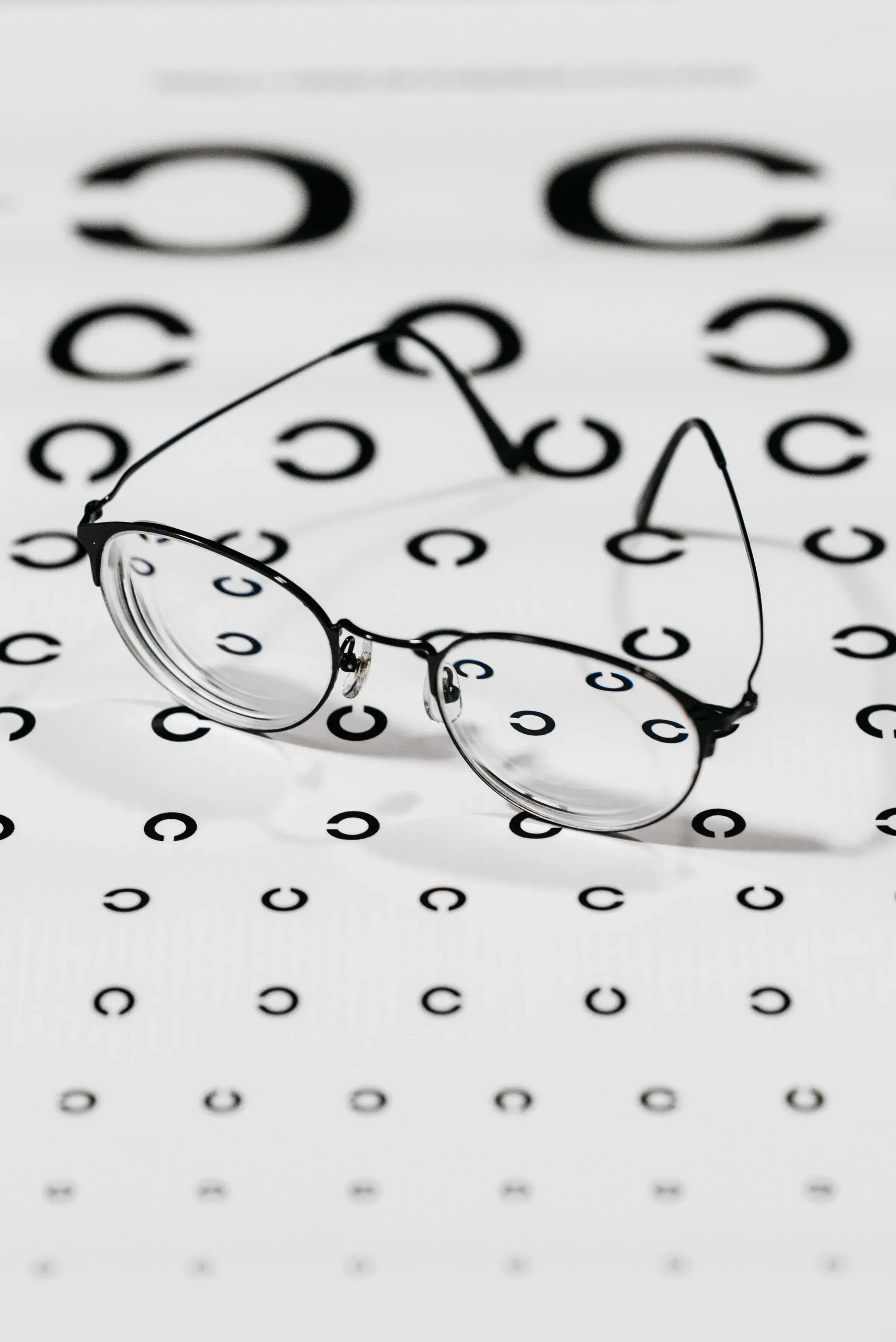
Stock photograph — https://www.pexels.com/photo/5996746/
Astigmatism means the front of the eye is shaped more like a rugby ball than a football — curved more steeply in one direction than the other. Light entering an eye like that focuses along two separate lines rather than a single point, so vision is smeared at every distance rather than sharply blurred at just one. It is extremely common, present to some degree in most eyes, and on its own it is not a disease.
What it actually looks like
Someone with uncorrected astigmatism does not usually describe things as simply blurry. Lights develop tails or streaks, letters and edges look doubled or smeared rather than soft, and the effect is present up close and at a distance simultaneously, rather than being worse for one or the other. It is commonly present alongside short- or long-sightedness and corrected in the same glasses, contact lenses, or procedure, rather than treated as a separate condition.
Astigmatism and keratoconus are not the same thing
Ordinary astigmatism is regular and stable: the cornea is curved unevenly, but the pattern of that unevenness does not change from year to year. Keratoconus is a progressive thinning and bulging of the cornea that produces irregular astigmatism, changes over time, and needs monitoring and sometimes treatment in its own right. Corneal scanning distinguishes the two reliably, which is one reason that scan is done before any correction is planned rather than assumed unnecessary.
How it is measured
Astigmatism is measured by mapping the curvature of the cornea across its whole surface, not by a single reading, producing a shape rather than a number. This corneal topography is what shows whether the astigmatism is regular — a smooth, symmetrical difference between the two curves — or irregular, which points toward keratoconus or another cause and changes the conversation considerably. The same map is used later to plan whichever correction is chosen, and to align a toric lens if one is used.
Correcting it with laser
Laser treatment reshapes the corneal surface to even out the difference between its two curves, and it can typically address astigmatism at the same time as any short- or long-sightedness in a single treatment. It suits astigmatism that is regular and stable, within limits set by how much correction is needed and how much corneal tissue is available to reshape.
Correcting it with a toric lens implant
During cataract surgery or lens exchange, a toric intraocular lens can correct astigmatism permanently, built into the same operation that replaces the natural lens. The advantage is a lasting correction without a separate procedure. The requirement is precision: the lens must be rotated to a specific axis measured before surgery and confirmed during it, because even a small rotation away from that axis reduces how well it corrects the astigmatism, and in some cases a lens that has rotated after surgery needs to be repositioned.
Corneal relaxing incisions
For smaller amounts of astigmatism, small incisions made at the edge of the cornea can relax its steeper curve and bring the two closer together. These are sometimes made during cataract surgery rather than as a separate step, and they are generally used for lesser degrees of astigmatism than a toric lens would be chosen for, since their effect is less exact and harder to fine-tune once made than a toric lens is to align.
Why the three routes are not interchangeable
Which of the three suits a given eye is not a matter of preference so much as of degree and circumstance. Laser needs enough healthy corneal tissue and a stable, regular pattern of astigmatism to work with. A toric lens is only relevant where the natural lens is already being replaced, whether for a cataract or as an elective lens exchange, since implanting a lens purely to correct astigmatism in an eye that does not otherwise need lens surgery is not how it is used. Relaxing incisions sit at the smaller end of what either of the other two would otherwise be asked to do. None of the three is simply the better option in the abstract — the right one depends on how much correction is needed, what else is being done to the eye at the same time, and how the cornea itself is shaped.
Why it is worth asking about specifically
Astigmatism left uncorrected during cataract surgery is the commonest reason someone still needs glasses for distance afterwards and is disappointed by that outcome, because a standard lens replaces the cataract without addressing the corneal shape underneath it. This is easy to miss in a consultation focused on the cataract itself, since the astigmatism may have been present quietly for years, corrected without comment by whatever glasses were already being worn, and never discussed as a separate item.
It is worth asking plainly, before surgery rather than after, whether your astigmatism has been measured and whether the plan corrects it — and if so, by which of these three routes, and what happens if the correction turns out to be slightly off once the eye has healed. A precise answer to that last question, rather than a general reassurance, is usually a good sign of how carefully the rest of the planning has been done.
This article is general information and is not advice about your own eyes. If something here worries you, arrange a consultation rather than acting on it alone.